


25 September, 2026
By User
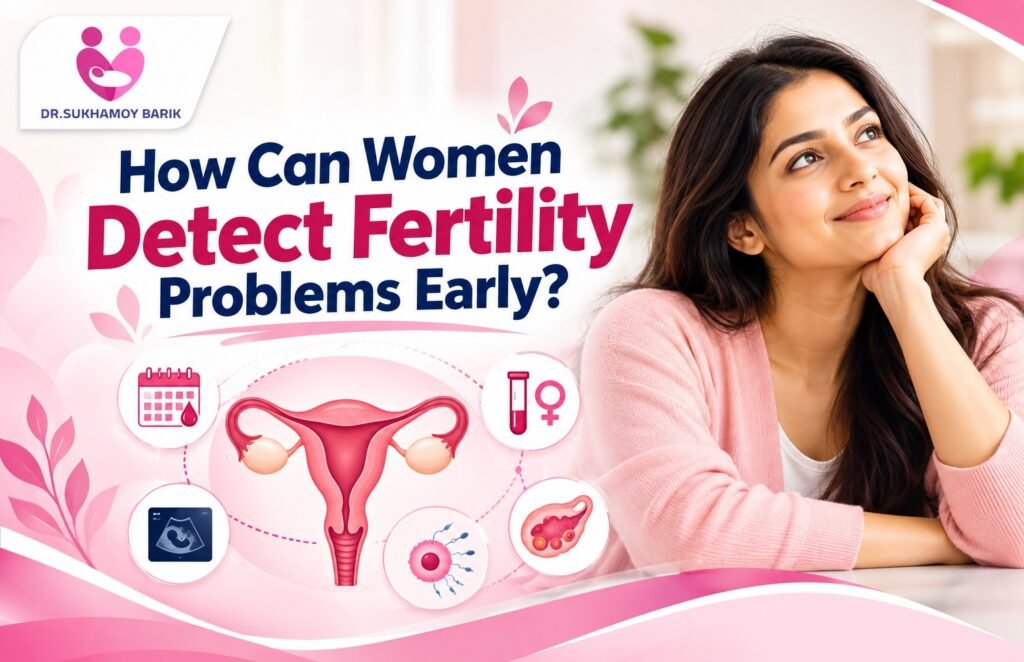
Fertility is influenced by many factors, including age, ovulation, menstrual health, reproductive anatomy, lifestyle, and the health of both partners. Identifying possible fertility concerns early can help women understand their reproductive health and seek appropriate medical guidance without unnecessary delay.
Women may sometimes overlook signs such as irregular periods, very painful menstruation, repeated pregnancy loss, or difficulty conceiving. These symptoms do not always mean infertility, but they can indicate that a professional evaluation may be helpful.
Consulting an experienced Best Gynaecologist in North Kolkata can provide a structured approach to understanding menstrual patterns, ovulation, hormonal health, reproductive conditions, and pregnancy-related concerns. Early assessment can also help identify conditions such as PCOS, fibroids, endometriosis, ovarian cysts, thyroid-related problems, or other factors that may affect fertility.

Female fertility refers to the ability to become pregnant and support a pregnancy. Several reproductive processes need to work together, including regular ovulation, healthy eggs, open fallopian tubes, a healthy uterus, appropriate hormonal function, and suitable reproductive conditions.
Fertility naturally changes with age, particularly as ovarian reserve and egg quality decline. However, fertility difficulties can occur at younger ages as well. Therefore, understanding individual reproductive health is more useful than relying only on age-based assumptions.

There is no single symptom that can confirm a fertility problem. However, certain signs may indicate that a woman should discuss her reproductive health with a gynaecologist.
Regular menstrual cycles often indicate that ovulation is occurring consistently, although a regular cycle does not guarantee fertility.
Very irregular periods, unusually long or short cycles, or missed periods may sometimes be associated with ovulation problems. PCOS, thyroid disorders, significant weight changes, excessive exercise, stress, and other medical conditions can affect menstrual regularity.
Women experiencing persistent menstrual irregularities may benefit from Menstrual Disorders in North Kolkata evaluation to identify the underlying cause.
Mild menstrual discomfort can be common, but severe or progressively worsening period pain should not always be considered normal.
Conditions such as endometriosis, adenomyosis, or certain pelvic disorders may cause significant pain and can sometimes be associated with fertility difficulties. A gynaecological evaluation can help determine whether further investigation is appropriate.
For couples having regular unprotected intercourse, pregnancy may not occur immediately. However, persistent difficulty conceiving may warrant an evaluation.
A fertility assessment generally considers both partners because infertility can involve female factors, male factors, combined factors, or unexplained causes.
Experiencing more than one pregnancy loss can be emotionally difficult and may require medical evaluation. Recurrent Miscarriages in North Kolkata care may involve reviewing medical history, pregnancy history, hormonal factors, uterine structure, genetic considerations, and other relevant causes.
Not every miscarriage has the same cause, and an individualised assessment is important.
Polycystic ovary syndrome can affect ovulation and menstrual regularity. Possible features include irregular periods, acne, increased facial or body hair, weight-related concerns, and difficulty with ovulation.
Women with suspected PCOS may require appropriate evaluation rather than relying solely on symptoms. PCOD or PCOS Treatment in Kolkata may include lifestyle guidance, menstrual management, ovulation-related care, and treatment based on individual reproductive goals.

A fertility evaluation usually begins with a detailed medical and reproductive history. The doctor may ask about menstrual cycles, previous pregnancies, miscarriages, surgeries, medications, lifestyle factors, and how long the couple has been trying to conceive.
Depending on the individual situation, investigations may include:
The timing and regularity of periods can provide useful information about ovulation. Additional hormonal investigations may sometimes be recommended based on symptoms and medical history.
Pelvic ultrasound can help evaluate the uterus and ovaries and may identify conditions such as fibroids, ovarian cysts, or features associated with PCOS.
When clinically appropriate, tests may be considered to provide information about ovarian reserve. These tests should be interpreted in the context of age, medical history, and reproductive goals rather than being treated as a direct prediction of natural fertility.
Depending on the circumstances, doctors may recommend investigations to assess the uterine cavity or whether the fallopian tubes are open.
A comprehensive fertility assessment may also include evaluation of the male partner. Semen analysis is commonly considered because male factors can contribute significantly to difficulty conceiving.

Several gynaecological conditions can influence reproductive health. Early recognition can support appropriate management.
PCOS is one of the common conditions associated with irregular ovulation. Management depends on whether the woman is currently trying to conceive, wants to regulate periods, or requires treatment for other symptoms.
Uterine fibroids are non-cancerous growths in the uterus. Their effect on fertility depends on factors such as size, number, and location.
When treatment is indicated, procedures may include Laparoscopic Myomectomy or other approaches depending on the individual clinical situation.
Many ovarian cysts are benign and resolve without treatment. However, certain cysts may require monitoring or intervention.
When surgery is recommended, Laparoscopic Ovarian Cystectomy may be considered in suitable cases.
Endometriosis can cause pelvic pain, painful periods, and sometimes difficulty conceiving. Early discussion with a gynaecologist can help determine whether further evaluation is required.
Polyps, fibroids within the uterine cavity, adhesions, and other structural problems may sometimes affect implantation or pregnancy.
Hysteroscopic Surgery may be used in selected cases to diagnose or treat certain conditions affecting the uterine cavity.
Women should consider speaking with a gynaecologist when they have persistent irregular periods, repeated pregnancy loss, significant pelvic pain, known reproductive conditions, or concerns about fertility.
Age is also an important consideration. Women who are planning pregnancy may benefit from discussing reproductive health earlier, particularly when there are known medical or gynaecological concerns.
Women with medical conditions requiring pregnancy-related monitoring may also benefit from High Risk Pregnancy Care in North Kolkata when pregnancy occurs.

Early evaluation does not necessarily mean that a woman has infertility. Instead, it provides an opportunity to understand possible contributing factors.
A consultation with a Best Gynaecologist in North Kolkata can help patients:
The goal should be informed, individualised care rather than unnecessary testing or treatment.

Dr. Sukhomoy Barik provides gynaecological and obstetric care with attention to each patient’s individual medical needs. The approach focuses on clear communication, appropriate evaluation, evidence-based treatment, and compassionate patient support.
For women planning pregnancy, care may include reproductive health assessment, fertility-related evaluation, pregnancy planning, and ongoing antenatal support.
The clinic also provides care related to Painless Normal Delivery in North Kolkata, pregnancy monitoring, and pregnancy complications where specialised supervision may be required.
Women seeking a Pregnancy Check Up center in North Kolkata can discuss their medical history, pregnancy concerns, routine investigations, and appropriate antenatal care with the doctor.
Some gynaecological conditions may require surgical treatment when medicines or observation are not sufficient. The appropriate procedure depends on the condition, symptoms, reproductive plans, medical history, and clinical findings.
An abdominal hysterectomy involves removal of the uterus through an abdominal incision. It may be considered for selected conditions when other treatment options are unsuitable.
A vaginal hysterectomy involves removing the uterus through the vagina. Suitability depends on individual anatomical and medical factors.
A laparoscopic hysterectomy uses small abdominal incisions and specialised instruments. It may offer benefits such as smaller incisions and potentially shorter recovery for appropriately selected patients.
The choice between abdominal, vaginal, and laparoscopic approaches should always be based on individual clinical assessment.

Women’s reproductive health changes throughout life. Fertility planning is important during the reproductive years, while later life may bring concerns related to perimenopause and menopause.
Women experiencing hot flashes, menstrual changes, vaginal symptoms, sleep difficulties, or other concerns can discuss these issues with a gynaecologist. Appropriate Menopausal Problems in North Kolkata care can help identify symptoms and discuss suitable management options.
Every woman has a different reproductive history. A treatment approach suitable for one patient may not be appropriate for another.
A patient-centred consultation should consider:
A trustworthy gynaecological consultation should also explain why a test or treatment is being recommended and what alternatives may be available.
Some women may need more detailed fertility assessment because of recurrent pregnancy loss, known pelvic conditions, previous reproductive surgery, irregular ovulation, or age-related reproductive concerns.
Infertility Management in North Kolkata should be personalised according to the underlying cause rather than based on a single test or symptom.
Similarly, women with recurrent pregnancy loss may need a structured evaluation before attempting another pregnancy.
There is no single symptom that confirms infertility. Irregular ovulation, very irregular periods, repeated pregnancy loss, significant pelvic pain, or prolonged difficulty conceiving may indicate that medical evaluation is appropriate.
Irregular periods can sometimes indicate inconsistent ovulation, which may make conception more difficult. However, the underlying cause needs to be identified before determining its effect on fertility.
No. PCOS can affect ovulation, but many women with PCOS can conceive naturally or with appropriate medical support. Treatment depends on individual circumstances and pregnancy goals.
Severe or progressively worsening menstrual pain can sometimes be associated with conditions such as endometriosis. A medical assessment can help determine whether further investigation is necessary.
Women can seek advice whenever they have concerns about fertility, irregular periods, recurrent pregnancy loss, known reproductive conditions, or pregnancy planning. Earlier consultation can be particularly useful when risk factors are present.
Some fibroids may have little or no effect on fertility, while others can affect the uterine cavity or pregnancy depending on their location and size. Individual evaluation is important.
No. Difficulty conceiving can involve female factors, male factors, both partners, or sometimes no identifiable cause. Assessment of both partners can provide a more complete understanding.
Recognising possible fertility concerns early can help women make informed decisions about their reproductive health. Changes in menstrual patterns, severe pelvic pain, PCOS symptoms, recurrent miscarriages, or persistent difficulty conceiving should not automatically be interpreted as infertility, but they can be reasons to seek professional advice.
With appropriate evaluation and personalised care, many underlying reproductive conditions can be identified and managed. Whether the concern involves fertility planning, menstrual disorders, pregnancy care, PCOS, recurrent miscarriages, or a gynaecological condition requiring surgery, timely consultation can support better-informed healthcare decisions.
For compassionate and personalised reproductive and gynaecological care, women can consult Dr. Sukhomoy Barik, an experienced Best Gynaecologist in North Kolkata, to discuss their symptoms, fertility concerns, pregnancy plans, and appropriate treatment options.