


30 September, 2026
By User
Hello Reader!
Welcome to the blog page of Dr. Sukhamoy Barik, one of the best gynecologists in North Kolkata.
Hysterectomy is a commonly performed gynecological surgery used to treat conditions such as uterine fibroids, abnormal uterine bleeding, endometriosis, adenomyosis, uterine prolapse, and certain cancers. For many women, the word “hysterectomy” can naturally bring questions about pain, recovery, complications, and the type of surgery that may be appropriate.
These concerns can become even more important when a woman is overweight or has obesity.
A common question is: “Is laparoscopic hysterectomy safe if I have obesity?”
The answer depends on the individual’s overall health, medical conditions, uterine size, previous surgeries, the reason for hysterectomy, and the expertise of the surgical team. Importantly, obesity does not automatically mean that laparoscopic hysterectomy cannot be performed. Evidence and professional guidance indicate that minimally invasive surgery can remain an appropriate option for selected patients with obesity.
Understanding Obesity and Laparoscopic Hysterectomy can help women have a more informed discussion with their gynecologist before surgery.

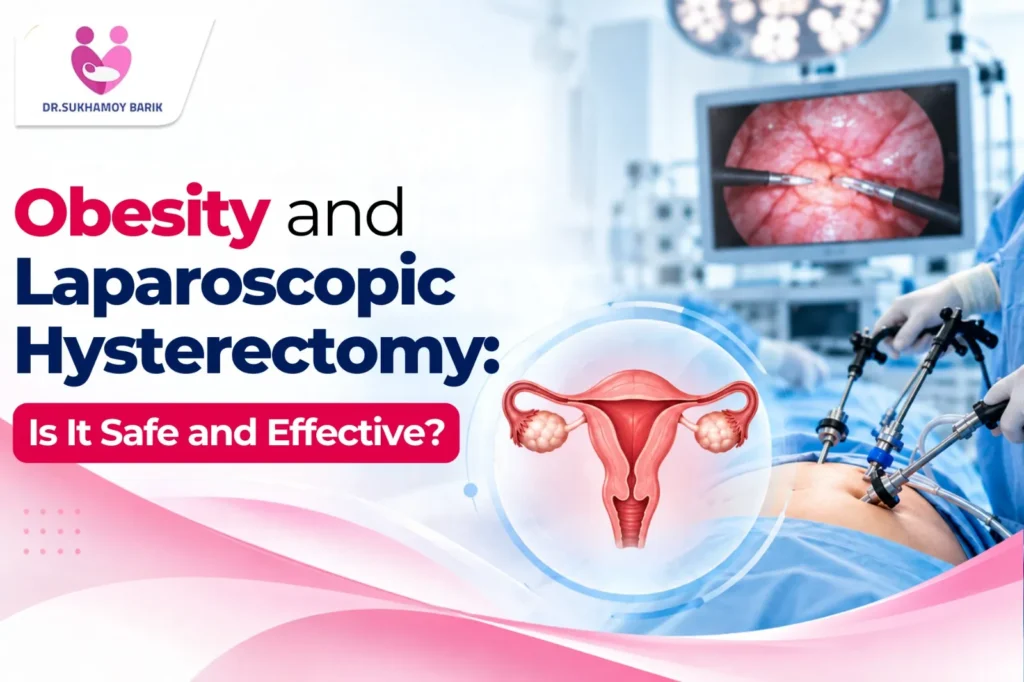
Laparoscopic hysterectomy is a minimally invasive procedure in which the uterus is removed through several small abdominal incisions. A laparoscope—a thin instrument with a camera—is inserted through one of the incisions, allowing the surgeon to view the pelvic organs on a monitor. Other surgical instruments are inserted through additional small incisions.
Depending on the procedure and clinical situation, the uterus may be removed through the vagina or through one of the abdominal openings after appropriate surgical preparation.
Compared with traditional open abdominal hysterectomy, laparoscopic surgery generally involves smaller incisions and is associated with shorter hospitalization, faster recovery, less postoperative pain, and fewer wound-related complications.
Obesity can influence several aspects of surgery and anesthesia. It may increase the risk of certain surgical and medical complications, including wound complications, blood clots, respiratory problems, and difficulties related to anesthesia.
ACOG describes obesity as a recognized risk factor for major and minor surgical complications regardless of the surgical route. However, available evidence indicates that laparoscopic surgery can have similar complication risks to open surgery in patients with obesity, making minimally invasive approaches a potential option when clinically appropriate.
Therefore, Obesity and Laparoscopic Hysterectomy should not be viewed as automatically incompatible.
Instead, the question should be: Is laparoscopic surgery appropriate and safe for this particular patient?
For appropriately selected patients, laparoscopic hysterectomy can be performed safely.
However, “safe” does not mean that the procedure carries no risk.
Every surgery has potential complications. Hysterectomy may involve risks such as:
The individual risk depends on several factors, not simply body weight. ACOG notes that the patient’s underlying medical conditions can also affect the risk of complications related to anesthesia and surgery.
Consequently, women considering Obesity and Laparoscopic Hysterectomy should undergo a detailed preoperative assessment rather than assuming that their weight alone determines surgical eligibility.

One important consideration is that laparoscopic surgery avoids the larger abdominal incision required for traditional open hysterectomy.
Open abdominal hysterectomy is associated with greater risks of complications such as wound infection, bleeding, blood clots, and longer recovery compared with minimally invasive approaches.
For appropriately selected patients, laparoscopic hysterectomy may therefore provide several potential advantages:
Laparoscopic surgery uses several small incisions rather than one large abdominal incision.
Because the abdominal incision is smaller, there may be fewer wound and abdominal-wall complications compared with open surgery.
Laparoscopic hysterectomy generally allows a shorter hospital stay compared with abdominal hysterectomy.
Patients undergoing laparoscopic hysterectomy generally return to normal activities sooner than those undergoing open abdominal hysterectomy.
Smaller incisions can contribute to less postoperative pain compared with open abdominal surgery.
These potential benefits are particularly relevant when discussing Obesity and Laparoscopic Hysterectomy, because avoiding a large abdominal incision may be an important consideration in surgical planning.
It can.
Performing laparoscopic surgery in a patient with obesity may present additional technical and anesthetic considerations. These can include:
However, technical difficulty does not necessarily mean that laparoscopic hysterectomy is unsuitable.
The surgeon needs to evaluate the complete clinical picture and determine which surgical approach offers the most appropriate balance of benefits and risks.
ACOG emphasizes that the route of hysterectomy should be selected based on factors such as uterine size and accessibility, associated pelvic disease, the need for additional procedures, surgeon training and experience, available technology, and the patient’s individual circumstances.
Before undergoing laparoscopic hysterectomy, women with obesity may require careful medical and anesthetic evaluation.
Your doctor may review:
Imaging such as ultrasound or MRI may also be recommended depending on the underlying condition.
The purpose of this assessment is not simply to determine whether surgery is possible. It helps the medical team anticipate potential challenges and plan the safest approach.

Preparation can play an important role in surgical safety.
If you have diabetes, hypertension, thyroid disease, anemia, or another medical condition, appropriate management before surgery is important.
Tell your doctor about all medications, supplements, and herbal products you are taking. Some may need to be adjusted before surgery.
If you smoke, discuss quitting or stopping before surgery with your healthcare team. Smoking can affect wound healing and respiratory health.
Good nutrition supports healing. A doctor or dietitian may recommend an individualized nutritional plan, particularly if you have nutritional deficiencies.
Your surgical and anesthesia teams may provide specific instructions regarding fasting, medications, activity, and other preparations.
Also Read: What is Advanced Laparoscopic Surgery? Benefits, Risks & Recovery
Blood clots are an important consideration after major surgery, and obesity is one of several factors that may increase venous thromboembolism risk.
Your surgical team may assess your individual risk and decide whether measures such as mechanical compression devices, early mobilization, and/or medication to prevent blood clots are appropriate.
ACOG’s enhanced recovery guidance emphasizes early mobilization as an important component of postoperative care and notes the importance of strategies to reduce venous thromboembolism risk after pelvic surgery.
Recovery varies from patient to patient.
Many women can return to normal activities sooner after laparoscopic hysterectomy than after open abdominal hysterectomy. However, recovery depends on:
Early gentle movement is generally encouraged when medically appropriate, while strenuous exercise and heavy lifting should be avoided until the surgeon provides clearance.
Your surgeon will give you specific instructions regarding bathing, exercise, driving, sexual activity, work, and follow-up appointments.
Not necessarily.
Although minimally invasive approaches are preferred whenever feasible, an open abdominal hysterectomy may still be appropriate in certain circumstances.
For example, factors such as a very large uterus, extensive adhesions, significant pelvic disease, or other anatomical or medical considerations may affect the choice of surgical route. ACOG recommends individualized selection of the hysterectomy route rather than applying one approach to every patient.
Therefore, the discussion about Obesity and Laparoscopic Hysterectomy should always be individualized.
The safety and feasibility of laparoscopic hysterectomy depend not only on the patient’s health but also on the surgeon’s experience, the available equipment, anesthesia support, and the hospital’s ability to manage potential complications.
ACOG specifically identifies surgeon training and experience, case volume, available technology, and hospital support among the factors that can influence the choice of hysterectomy route.
If you are searching for the best lady gynecologist in Kolkata for a hysterectomy consultation, look for a qualified gynecologist who will assess your individual condition rather than recommending a particular surgical method solely based on weight.

Yes, obesity does not automatically rule out laparoscopic hysterectomy. The suitability of the procedure depends on individual health, anatomy, the indication for surgery, and the surgeon’s assessment.
Laparoscopic surgery can offer advantages such as smaller incisions, shorter hospitalization, faster recovery, and fewer wound complications compared with abdominal hysterectomy. However, the safest approach varies between patients.
Obesity is associated with an increased risk of some surgical and medical complications. However, risk varies according to the degree of obesity, other medical conditions, the type of surgery, and individual patient factors.
Not necessarily. Recovery is individual. Laparoscopic surgery generally allows faster recovery than open abdominal surgery, but obesity and associated health conditions can influence recovery.
Not every patient needs to reach a particular weight before surgery. Your doctor will determine whether weight optimization would improve safety in your specific case. Surgery should not be delayed unnecessarily when treatment is medically necessary.
Managing existing medical conditions, reviewing medications, maintaining appropriate nutrition, stopping smoking, following preoperative instructions, and attending all recommended evaluations can help you prepare for surgery.
Obesity and Laparoscopic Hysterectomy is an important topic because many women with obesity may worry that minimally invasive hysterectomy is automatically unsuitable for them. In reality, obesity is one factor among many that doctors consider when selecting a surgical approach.
For appropriately selected patients, laparoscopic hysterectomy can offer the advantages of minimally invasive surgery, including smaller incisions, shorter hospital stays, faster return to normal activities, and fewer wound-related complications compared with open abdominal hysterectomy.
At the same time, obesity can increase certain surgical and anesthetic risks, making individualized preoperative assessment particularly important.
If you are considering hysterectomy and have obesity, speak with an experienced gynecologist about your medical history, surgical options, potential risks, and expected recovery.
If you are looking for the best lady gynecologist in Kolkata, Dr. Sukhamoy Barik can provide a personalized gynecological evaluation and help you understand whether laparoscopic hysterectomy is appropriate for your condition.