


26 August, 2026
By User
PCOD and PCOS can cause irregular periods, hormonal changes, acne, weight changes, and fertility concerns, but they are not exactly the same. Understanding their causes, symptoms, diagnosis, and treatment can help women seek timely gynecological care.
If you are experiencing irregular periods, excess hair growth, unexplained weight changes, acne, or difficulty conceiving, consulting a PCOS PCOD Treatment Gynecologist in Kolkata can help identify the underlying hormonal or reproductive concerns. Proper evaluation is important because symptoms can overlap with thyroid disorders, insulin resistance, and other conditions.
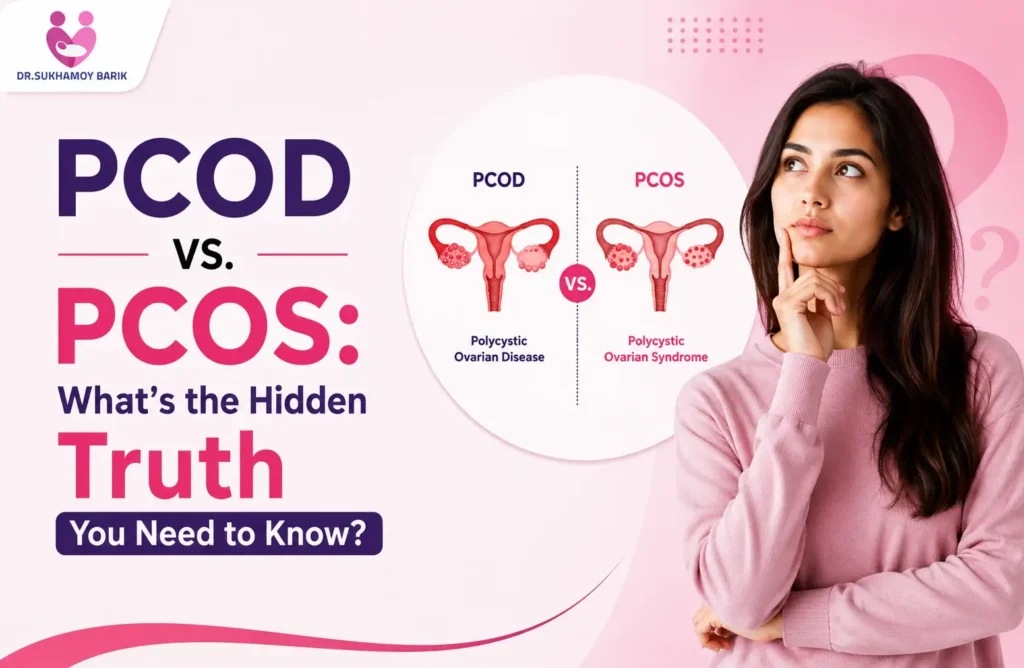
PCOD and PCOS are commonly discussed together, but they should not automatically be considered identical conditions.
| Factor | PCOD | PCOS |
| Full form | Polycystic Ovarian Disease | Polycystic Ovary Syndrome |
| Main concern | Often involves ovarian and ovulatory changes | Can involve reproductive, hormonal, and metabolic changes |
| Periods | May become irregular | Irregular or absent periods are common |
| Ovulation | May be affected | Ovulatory dysfunction is common |
| Androgens | May not always be significantly elevated | Elevated androgen activity may occur |
| Metabolic concerns | May occur depending on the individual | Insulin resistance and metabolic risks can be important |
| Fertility | Ovulation problems may affect conception | Ovulatory dysfunction can contribute to infertility |
| Treatment | Depends on symptoms and underlying causes | Individualized according to reproductive, hormonal, and metabolic needs |
PCOD and PCOS can share symptoms, but PCOS is a broader syndrome involving hormonal and potentially metabolic abnormalities. Diagnosis should rely on a professional medical evaluation rather than symptoms alone.
Common symptoms may include:
Symptoms can vary significantly from one woman to another, and not everyone experiences the same combination. The intensity and presentation of symptoms can differ significantly from one woman to another.
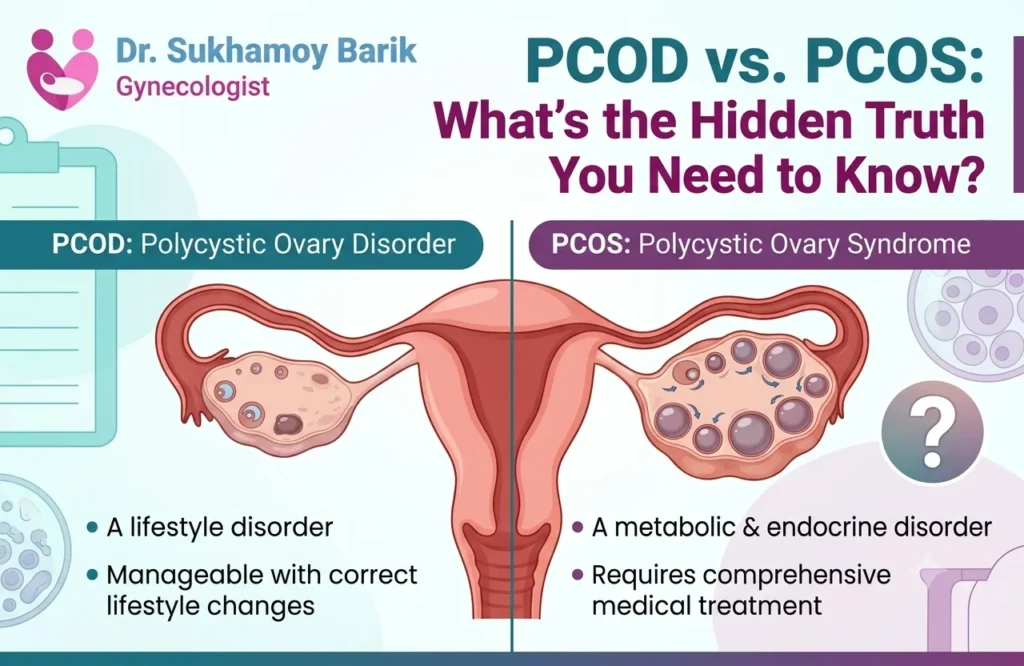
No single underlying cause accounts for every case. Hormonal regulation, ovarian function, insulin metabolism, genetics, body weight, and lifestyle factors can influence the clinical picture.
For PCOS, increased androgen activity and insulin resistance may play important roles in some women. However, PCOS is complex, and having one symptom does not establish the diagnosis.
PCOD is also used differently in everyday clinical discussions, making it especially important to understand what a healthcare professional means by the term.
PCOS can influence several systems rather than affecting only the ovaries.
Menstrual and Reproductive Health
Irregular ovulation can result in irregular menstrual cycles and may make conception more difficult.
Hormonal Health
Higher androgen activity can contribute to acne, unwanted facial hair, oily skin, and scalp hair thinning.
Metabolic Health
Some women with PCOS develop insulin resistance, which can influence blood glucose regulation and long-term metabolic health.
Emotional Well-Being
Living with persistent symptoms, fertility concerns, or body changes may affect confidence and emotional well-being. These concerns deserve attention during consultations.
Consider consulting a gynecologist if you have:
Early evaluation can help identify the cause of symptoms and establish an appropriate management plan.
There is no single symptom or test that can diagnose every case of PCOS. A gynecologist may consider several factors, including:
1. Medical history:
Your menstrual pattern, symptoms, medications, weight changes, and reproductive history may be reviewed.
2. Physical examination:
The doctor may assess signs associated with hormonal imbalance.
3. Blood tests:
Hormone levels and other relevant laboratory markers may be evaluated.
4. Ultrasound:
Pelvic imaging may be recommended when clinically appropriate.
5. Excluding other conditions:
Conditions that can produce similar symptoms may need to be ruled out.
This comprehensive approach helps avoid relying on ultrasound findings or one symptom alone.
Treatment should be individualized according to symptoms, reproductive goals, metabolic health, and other medical factors.
Lifestyle and Nutrition
Regular physical activity, balanced nutrition, adequate sleep, and sustainable weight management can support overall metabolic and reproductive health.
Menstrual Cycle Management
A gynecologist may recommend appropriate medication to regulate menstrual cycles or manage symptoms when necessary.
Managing Androgen-Related Symptoms
Treatment may address acne, unwanted hair growth, or scalp hair loss depending on the underlying hormonal pattern.
Fertility Support
Women trying to conceive may require ovulation-focused treatment and fertility evaluation.
Metabolic Risk Management
When insulin resistance, elevated blood glucose, cholesterol abnormalities, or other metabolic concerns are present, these may become part of the treatment plan.
No single PCOS treatment or cure is effective for every woman, as care needs to be tailored to individual symptoms and health needs. Effective care focuses on managing the individual’s symptoms and reducing relevant health risks.
A specialist-led approach can connect menstrual, hormonal, reproductive, and metabolic concerns instead of treating each symptom separately.
For women looking for a Best Gynecologist in North Kolkata, Dr Sukhamoy Barik can evaluate concerns related to menstrual irregularities, hormonal symptoms, fertility, and women’s reproductive health and recommend appropriate investigations and treatment based on individual needs.
If you have searched for a PCOD and PCOS doctor near me, focus on finding a qualified gynecologist who can assess your complete medical history rather than choosing treatment solely from online symptom lists.
The right treatment depends on what is actually causing the symptoms and what the patient wants to achieve.
For example:
This is why the Best doctor for PCOD and PCOS treatment is not necessarily the doctor offering one standard treatment for everyone. Individualized assessment is central to responsible care.
Yes, ovulatory problems associated with PCOD or PCOS can make conception more difficult for some women. However, fertility outcomes vary widely.
Having PCOS does not automatically mean infertility. Many women with PCOS conceive naturally or with appropriate medical support.
If pregnancy is a goal, discuss your menstrual and reproductive history with a gynecologist rather than delaying evaluation because of assumptions about PCOS.
Yes. Management often involves ongoing attention to menstrual health, reproductive goals, metabolic health, and symptoms.
A long-term plan may include:
The objective is not simply to manage one symptom but to support overall women’s health. Check Patient’s Reviews click: https://bit.ly/4qAJl7f
Before or during an appointment, useful questions include:
Writing down your menstrual pattern and major symptoms before the appointment can make the consultation more productive.
If persistent symptoms are affecting your menstrual, hormonal, or reproductive health, professional assessment can help clarify whether you have PCOS, PCOD, or another condition with similar symptoms.
Women seeking a Book PCOS doctor consultation option can schedule an appointment with a qualified gynecologist for personalized evaluation rather than self-diagnosing from symptoms.
PCOD and PCOS can affect periods, hormones, metabolism, and fertility, but their clinical meaning is not identical. Recognizing symptoms early and obtaining an individualized evaluation can support better reproductive and long-term health. If you experience persistent menstrual or hormonal concerns, consulting a qualified PCOS PCOD Treatment Gynecologist in Kolkata can help establish an appropriate, evidence-based care plan. Visit Our Address click: https://maps.app.goo.gl/tuo9hKYWtJpqV36t6
Is PCOD the same as PCOS?
No. PCOD and PCOS are often used interchangeably in everyday conversation, but they are not necessarily identical terms. PCOS is a recognized syndrome with reproductive, hormonal, and potentially metabolic features.
Which is more serious, PCOD or PCOS?
The impact varies from person to person. PCOS may involve broader hormonal and metabolic concerns, but the seriousness cannot be determined simply by whether someone is described as having PCOD or PCOS.
Can PCOD become PCOS?
PCOD and PCOS should not be viewed simply as two stages of the same disease. If symptoms change, a gynecologist should reassess the underlying condition.
Can PCOS cause infertility?
PCOS can interfere with ovulation and therefore may make conception more difficult for some women. However, PCOS does not mean that pregnancy is impossible.
Can PCOS be cured permanently?
There is no single permanent cure applicable to every person with PCOS. Symptoms and associated health risks can often be effectively managed through individualized treatment and lifestyle measures.
Does having ovarian cysts mean I have PCOS?
Not necessarily. The presence of ovarian cysts alone does not establish PCOS. Diagnosis requires consideration of the overall clinical picture and appropriate medical evaluation.
When should I see a gynecologist for irregular periods?
If irregular periods persist, become significantly different from your usual pattern, or occur alongside acne, excess hair growth, weight changes, or fertility concerns, consider consulting a gynecologist.