


8 October, 2026
By User
Women may experience various changes across perimenopause, menopause, and postmenopause, including sudden heat episodes, disrupted sleep, emotional fluctuations, vaginal discomfort, and changes in menstrual patterns. Understanding these transitions can help women seek timely Menopausal Problems Treatment for Women from a Gynecologist in Kolkata. With personalized guidance, appropriate lifestyle measures, and suitable medical care, many symptoms can be managed effectively.
Menopause is a natural stage of reproductive ageing, but the transition does not happen overnight. It generally progresses through three stages:
| Stage | What Happens | Common Changes |
| Perimenopause | Hormone levels fluctuate before menopause | Irregular periods, hot flashes, sleep problems |
| Menopause | Menstrual periods stop permanently after 12 consecutive months without a period | Hot flashes, vaginal dryness, mood changes |
| Postmenopause | The years following menopause | Symptoms may continue or improve, while some long-term health considerations become more important |
Every woman experiences these stages differently. Some women experience only minor symptoms, while others may face changes that considerably interfere with their everyday activities.
During the menopausal transition, ovarian hormone production changes, particularly estrogen levels. These hormonal fluctuations can influence the menstrual cycle, temperature regulation, sleep, mood, sexual health, and vaginal tissues.
Common effects include:
However, every woman experiences menopause differently.
The perimenopausal transition can begin years before menstruation permanently stops. Hormone fluctuations during this stage may cause noticeable changes.
Common Perimenopause Symptoms
Because many of these symptoms can have other causes, persistent or unusual changes deserve appropriate medical evaluation.
Some symptoms may continue into postmenopause, although their intensity can change over time.
Women may experience:
Postmenopause also makes preventive healthcare increasingly important because declining estrogen levels can influence bone and cardiovascular health.
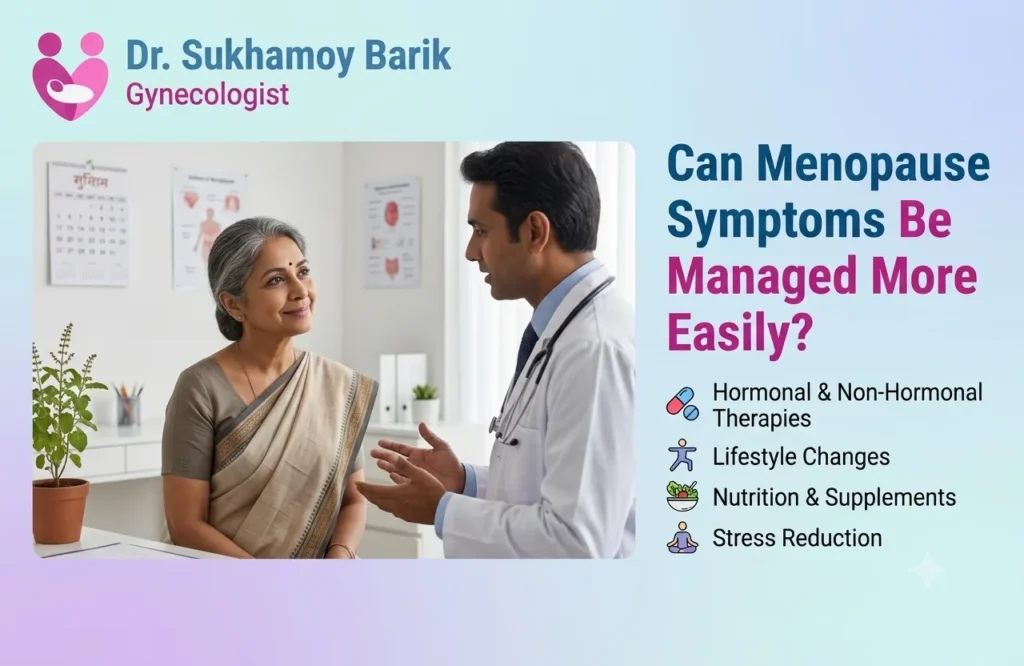
Yes. Can menopause symptoms be managed with treatment? In many cases, symptoms can improve through individualized lifestyle measures, non-hormonal treatments, or hormone therapy when medically appropriate.
Treatment depends on:
There is no universal menopause treatment. A gynecologist can assess the individual situation and discuss suitable options.
Treatment options may vary based on a woman’s symptoms and medical history and can include:
Lifestyle Changes
Staying physically active, getting sufficient sleep, eating a nutritious diet, managing stress, and limiting individual triggers can help promote overall well-being.
Non-Hormonal Options
Certain prescription or non-prescription approaches may help specific symptoms, particularly when hormone therapy is unsuitable or unwanted.
Hormone Therapy
Menopausal hormone therapy may ease symptoms such as hot flashes and vaginal discomfort in women who are considered suitable candidates.. However, menopausal hormone therapy may not be appropriate for every woman.
A healthcare professional should evaluate each woman’s potential risks and benefits before recommending hormone therapy.
Vaginal Treatments
Women experiencing vaginal dryness or discomfort may benefit from lubricants, moisturizers, or specific local treatments depending on their symptoms and medical history.
Consider consulting a healthcare professional if menopause symptoms persist, become severe, or start affecting your daily routine.
Seek medical advice for:
Not all symptoms are necessarily caused by menopause. A medical evaluation can help identify or exclude other underlying health conditions.
A Gynecologist for Menopause in Kolkata can assess symptoms and develop a personalized management strategy.
A consultation may include:
Routine tests are not always necessary to diagnose typical menopause, particularly when the clinical history is clear. Your gynecologist can determine whether additional investigations are appropriate.
A Menopause Specialist for Hormonal Changes in Kolkata can help women understand why symptoms occur and which treatment options may suit their circumstances.
Rather than treating hormone levels alone, menopause care should consider the woman’s symptoms, health risks, lifestyle, age, and treatment goals.
This individualized approach can make menopause management more practical and comfortable.
Women looking for the Best Gynecologist in North Kolkata should consider factors such as clinical experience, individualized care, communication, treatment options, and experience in managing menopausal concerns.
Similarly, women searching for the best Gynecologist in Dumdum may benefit from choosing a qualified specialist who can provide comprehensive women’s healthcare alongside menopause management. Check our youtube video link: https://www.youtube.com/watch?v=8lMl3Fz5Qp0
Menopause care extends beyond symptom relief. Postmenopausal health also focuses on maintaining strength, mobility, cardiovascular wellbeing, and bone health.
These habits support overall health and can complement medical menopause management.
If hot flashes, sleep problems, vaginal symptoms, mood changes, or menstrual irregularities are affecting your quality of life, professional guidance can help.
Dr. Sukhamoy Barik can provide gynecological evaluation and individualized guidance for women experiencing reproductive and hormonal changes. A consultation can help identify the likely cause of symptoms and determine whether lifestyle measures, medication, or further assessment may be appropriate. Check patient’s Review click: https://shorturl.at/6paZD
Perimenopause, menopause, and postmenopause represent important stages of women’s health rather than conditions that women simply need to tolerate. Hormonal changes can cause diverse symptoms, but personalized care can improve comfort and wellbeing. With evidence-based evaluation, healthy lifestyle choices, and appropriate treatment, women can navigate menopause confidently. Consulting a qualified gynecologist helps ensure that persistent or concerning symptoms receive proper attention. Check map link click: https://maps.app.goo.gl/n8QT2XnCBRtXSit96
How do hormonal changes affect women during menopause?
Changing estrogen levels can affect menstrual cycles, temperature regulation, sleep, mood, vaginal tissues, sexual health, and urinary function. The intensity and combination of symptoms vary considerably between women.
Can menopause symptoms be managed with treatment?
Yes. Menopause symptoms can often be managed through lifestyle changes, non-hormonal treatments, local therapies, or hormone therapy when medically appropriate. Treatment should be selected according to individual symptoms and health risks.
What is the difference between perimenopause and menopause?
Perimenopause is the transitional period when hormonal fluctuations cause menstrual and other changes. Menopause is reached after 12 consecutive months without a menstrual period, provided there is no other cause.
How long can menopause symptoms last?
The duration varies significantly. Some women experience symptoms for a relatively short period, while others may continue to have hot flashes or vaginal symptoms for several years.
Can menopause cause sleep problems?
Yes. Hormonal changes, night sweats, hot flashes, mood changes, and other menopause-related factors can contribute to difficulty falling asleep or staying asleep.
Is hormone therapy suitable for every woman?
No. Hormone therapy may benefit some women but may not be appropriate for everyone. A gynecologist should review your medical history, symptoms, risks, and preferences before recommending it.
When should I consult a gynecologist for menopause symptoms?
Consider consultation when symptoms are persistent, severe, unusual, or affecting daily life. Any bleeding after menopause requires medical evaluation.